 Nate-Land Studios
Rebuilding the Plane While Flying It.
The FranklinCovey tech stack story: consolidating five products onto one platform while delivery kept moving.
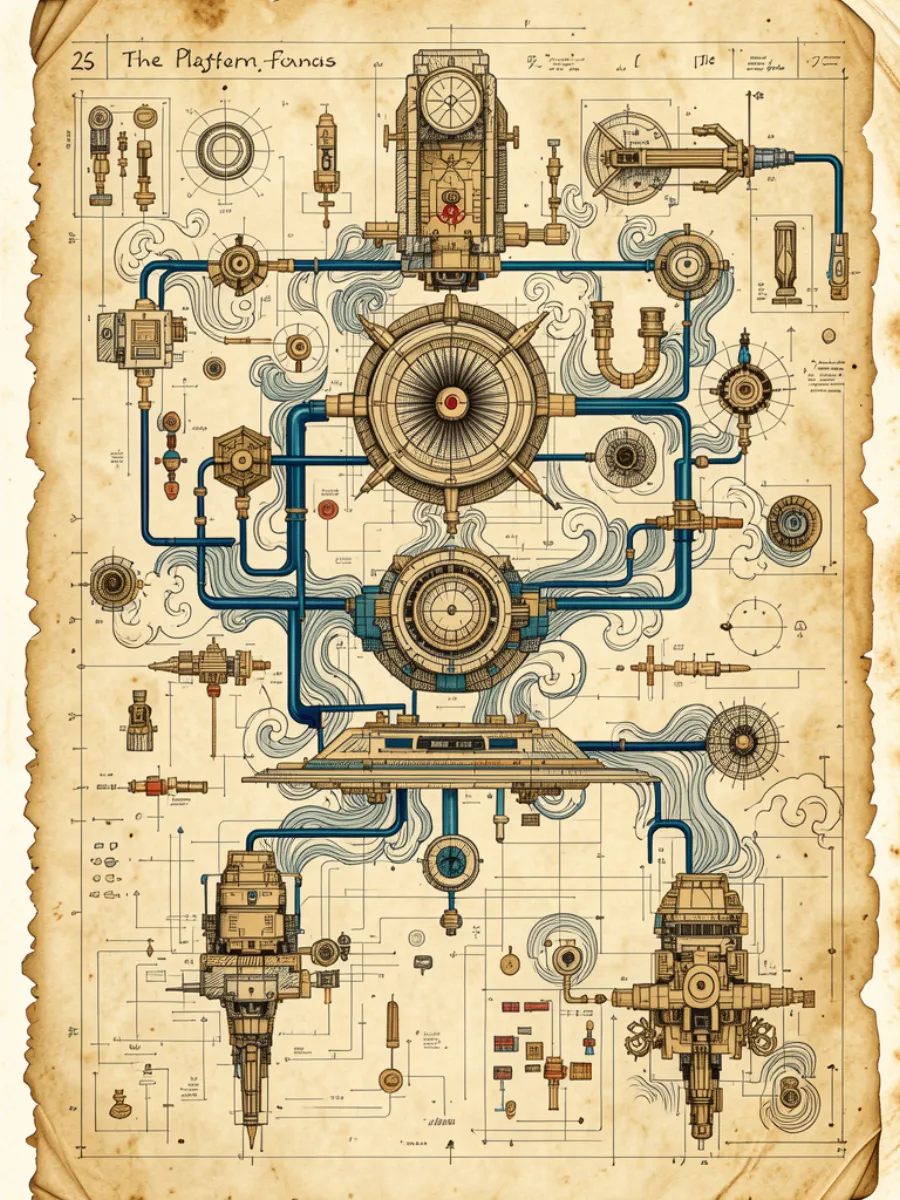
A sprawling product ecosystem.
One platform? Not quite. Five distinct products. Multiple stacks. One small team holding it all together.
LMS
The learning management system built by the FranklinCovey team.
Client app
The administrative interface.
Learner app
The core learning platform. Another LMS, which came in through an acquisition.
Testing app
Standalone assessments.
Mobile apps
Multiple platforms.
A small team. A sprawling architecture. A company that needed to grow.
Scaling crisis
Infrastructure costs were growing super-linearly with user growth. Unsustainable at scale.
Resource drain
One to two engineers were fully consumed keeping data synchronized across fragmented systems.
Technical debt
Multiple stacks created maintenance nightmares and paralysis over where to put people.
Growth imperative
A new CRO was hired with a mandate: change the growth curve substantially.
Four objectives.
Clear, measurable targets to anchor every technical decision and justify every trade-off.
Improve lead time
Increase team flexibility and cross-functional skills to streamline delivery.
Reduce escaped defects
Get fewer critical issues into production through better architecture.
Cut AWS cost by 30%
Optimize infrastructure and resource use across the consolidated platform.
Reduce COGS
Lower the minimum team size required for ongoing maintenance and support.
Get the buy-in, then execute.
A strategy to unify the platform. Start with the executive team, then work from the easy wins toward the hard part.
1. Leadership and executive buy-in
Securing the mandate. Without organizational commitment, nothing else moves.
2. Low-hanging fruit and developer productivity
An admin UI rewrite and dual writes. Well-scoped problems, executed cleanly.
3. The hard part
Making the learner tool the system of truth and replacing the LMS. This is where the real complexity surfaced.
4. The long tail
Admin consolidation and an assessment rebuild. A long tail of discovery, dependency, and organizational endurance.
The attachment was emotional.
The challenge
Historical teams were deeply tied to legacy tools that had once been the new hotness. FranklinCovey has a remarkable tolerance for customer-facing pain, as long as nothing changes.
The strategy
Partner heavily with my manager and the division head. Surface the business metrics. Help them see it logically before they could accept it emotionally.
Overcoming emotional attachment to legacy systems required as much leadership energy as the technical work itself.
The technical bets.
Getting executive buy-in
The first pitch: two engineers' time recovered, a 30–40% AWS reduction, a smaller team footprint, and a single tech stack that made real flexibility possible.
Engineering team conviction
1-on-1s, team meetings, and formal training plans. I had to prove I wasn't playing favorites while asking half the team to abandon their expertise.
Process changes
A new tech design review process. Expanded pull request coverage. Pairing introduced as team culture. Two teams learning to operate as one.
The human work.
Executive selling
Helping my manager carry the vision upward, translating architecture into business metrics that landed at the executive level.
Product integration
Redesigned staff meetings to bring Product in. No platform consolidation succeeds without product alignment and shared ownership.
Manager goals
Managers were tasked with building feature teams that crossed legacy team boundaries, focused on cross-training and go-forward work streams.
Team changes
Some team members couldn't make the transition. We helped them find roles where they could be successful, honestly and with care.
State at handoff.
A snapshot of where things stood at the end of my tenure. The hill was longer than expected, but the summit was always visible.
Buy-in and the quick wins
Executive buy-in secured. Admin UI rewrite completed. Dual writes enabled, with no major incidents.
The system of truth
Making the learner tool the system of truth exposed the true depth of the consolidation. Ongoing.
The legacy LMS
Customers migrated off the legacy LMS successfully. Treating its backend as a microservice was underway. The replacement was still unsettled two years in.
The long tail
Admin consolidation and the assessment rebuild in progress, informed by everything learned before.
Two of four, with two still open.
Lead time: improved
Better for the team members working in the new architecture.
COGS: reduced
Achieved through cross-training and greater system independence.
Defect rate: mixed
Initially reduced, then reverted as new data model complexities emerged. Work continues.
AWS cost: pending
Full savings not yet realized. Early data supports the 30% hypothesis, and it depends on completing the consolidation.
What I would tell the next person.
Calendar time is brutal to manage
Vision planning is normal work. Getting executive buy-in and migrating customers consumed nearly two years. Plan for that reality explicitly.
Data models are non-delegable
Foundational data models must be sound from day one. Some decisions are too consequential to delegate, even to trusted engineers.
Buy-in is never binary
Not everyone who says yes means yes. Continuous communication, up, down, and across, is not optional. It's the job.